
For many homeowners, the idea of remodeling their home is about more than updating an outdated kitchen or creating a beautiful new bathroom. It is about making sure the home continues to work for them as life changes.
Aging in place is the concept of designing or modifying a home so that people can remain safely, comfortably, and independently in the home they love for as long as possible. Rather than waiting until mobility becomes difficult or a medical need arises, homeowners can make thoughtful improvements today that create a safer and more comfortable environment for the future.
At Varenza Design Build, we believe a well-designed home should adapt to the people who live in it. Aging-in-place remodeling does not have to make a home look institutional or clinical. With the right design approach, safety features can be incorporated seamlessly into a beautiful, functional, and welcoming home.
What Does Aging in Place Mean?
Aging in place means remaining in your current home as you grow older instead of moving to a different residence solely because your home no longer meets your needs.
For some homeowners, this may mean planning for changes in mobility. For others, it may involve improving bathroom safety, eliminating tripping hazards, making the kitchen easier to use, or creating a first-floor living space.
The important point is that aging in place looks different for every household.
A couple in their 50s may want to prepare their home for the next 20 or 30 years. Someone recovering from an injury may need improved accessibility immediately. Another homeowner may simply want a home that is easier and safer for guests and family members of different ages and abilities.
The best aging-in-place designs anticipate these possibilities without sacrificing style.
Why Plan for Aging in Place Now?
One of the biggest advantages of planning ahead is that you can make decisions while you have the time, resources, and flexibility to choose exactly what you want.
Waiting until a mobility challenge occurs can force homeowners to make quick decisions under stressful circumstances. A bathroom that worked perfectly for decades may suddenly become difficult to navigate. Stairs that were once insignificant can become a major obstacle. A narrow doorway or slippery shower floor can create unnecessary risks.
Planning ahead allows homeowners to address these issues proactively.
It also allows accessibility improvements to become part of the overall design instead of appearing as additions made after a problem occurs.
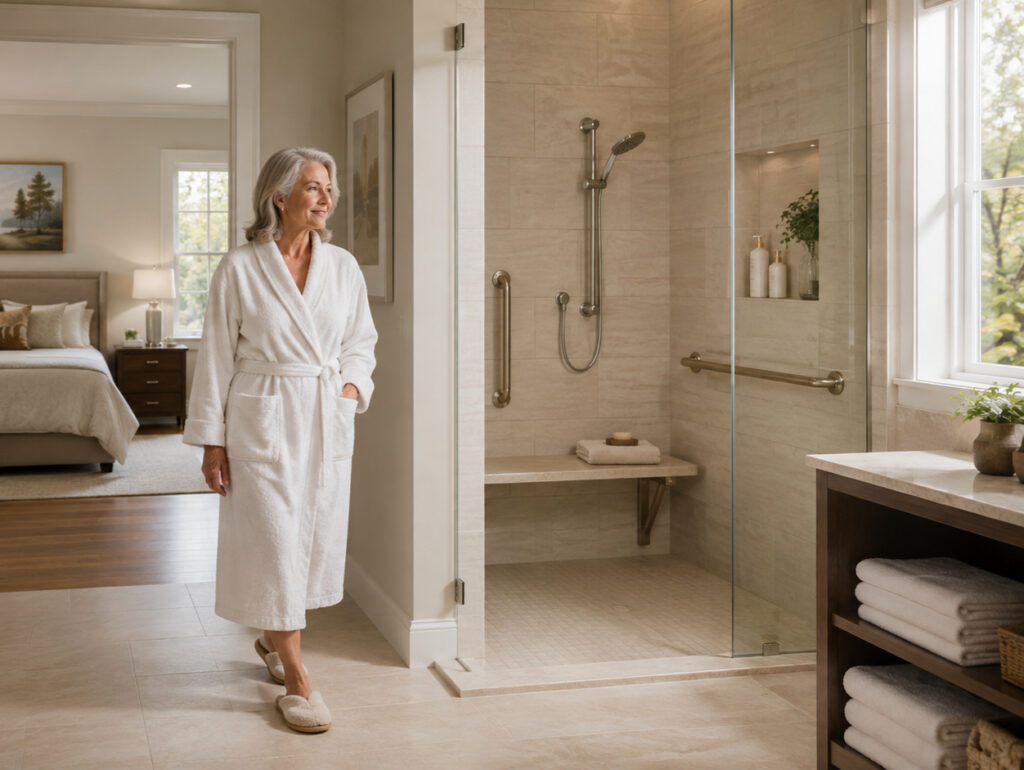
For example, a spacious walk-in shower with a built-in bench, attractive tile, handheld showerhead, and strategically placed grab bars can look like a high-end bathroom upgrade today while also providing additional support in the future.
That is the difference between simply adding accessibility features and designing a home for long-term usability.
The Bathroom: One of the Most Important Areas to Consider
Bathrooms are often one of the first places homeowners consider when planning an aging-in-place remodel.
Water, hard surfaces, limited floor space, and changes in mobility can create potential safety concerns. Fortunately, a bathroom remodel provides an opportunity to address many of these issues while dramatically improving the appearance and functionality of the space.
Walk-In Showers
A walk-in or curbless shower can make entering and exiting the shower significantly easier. Eliminating or minimizing the threshold reduces the need to step over an obstacle.
A properly designed shower can also incorporate:
- Built-in seating or a shower bench
- Handheld showerheads
- Multiple shower controls
- Non-slip flooring
- Conveniently positioned grab bars
- Adequate lighting
- Easy-to-reach storage
- Wider shower entrances
These features can be incorporated into an elegant design using quality tile, glass, fixtures, and custom finishes.
Grab Bars
Grab bars can provide valuable support around the toilet and inside the shower.
However, they do not have to look like an afterthought. Modern grab bars are available in a variety of finishes and styles, allowing them to coordinate with faucets, cabinet hardware, lighting, and other bathroom elements.
Even if a homeowner does not currently need grab bars, the bathroom can be designed with appropriate blocking behind the walls so that bars can be installed securely in the future.
Bathroom Flooring
Flooring is another important consideration. Smooth, highly polished surfaces can become slippery when wet.
Choosing appropriate flooring with slip resistance can help create a safer environment while still allowing homeowners to achieve the aesthetic they want.
Kitchens Designed for the Future
The kitchen is another area where thoughtful design can make everyday activities easier.
As homeowners age, bending, reaching, lifting, and standing for long periods may become more difficult. A kitchen designed with accessibility and ergonomics in mind can reduce unnecessary strain.
Some considerations include:
- Pull-out shelves and drawers
- Easy-to-reach storage
- Lower or adjustable work surfaces
- Well-positioned appliances
- Touch or lever-style faucets
- Large cabinet pulls
- Good task lighting
- Clear pathways between work areas
- Appliances that are easy to access
For example, deep lower cabinets can be difficult to use because homeowners must bend down and reach toward the back. Pull-out drawers and shelves bring the contents toward the user and make everyday storage much easier.
The goal is not necessarily to make the kitchen look different. The goal is to make the kitchen work better.
Creating a More Accessible Home
Aging-in-place design extends beyond individual rooms. The overall layout of the home plays an important role.
Doorways and Hallways
Wider doorways can improve accessibility for someone using a walker or wheelchair. They can also make moving furniture and everyday items easier.
During a remodel, homeowners may have opportunities to modify doorway widths or eliminate unnecessary barriers between rooms.
Lighting
Good lighting becomes increasingly important as vision changes with age.
A well-designed home should have adequate ambient lighting as well as task lighting in areas where homeowners prepare food, read, work, or perform detailed activities.
Motion-activated lighting can also be useful in locations such as hallways, bathrooms, closets, and stairways.
Flooring Transitions
Changes in flooring height can create tripping hazards. During a remodel, designers can evaluate transitions between different flooring materials and look for opportunities to create smoother connections between spaces.
Stairs
Stairs deserve special attention in a long-term home plan.
Depending on the home’s layout, homeowners may consider creating a primary bedroom and full bathroom on the main level. This does not mean eliminating upstairs living space. Instead, it provides an option for single-level living if navigating stairs becomes difficult later.
Universal Design: A Better Way to Think About Aging
Aging-in-place remodeling is closely connected to universal design.
Universal design focuses on creating spaces that are usable by as many people as possible, regardless of age or ability.
This approach benefits everyone.
A curbless shower is helpful for someone using a walker, but it is also convenient when cleaning the bathroom. A lever-style faucet may be easier for someone with limited hand strength, but it is also convenient when your hands are wet or full. A wide doorway may improve wheelchair accessibility, but it also makes moving furniture easier.
This is why universal design does not have to feel like a compromise.
Instead, it can create a home that is more comfortable and functional for the entire household.
Aging in Place Does Not Mean Sacrificing Style
One common misconception is that an accessible home must look clinical or resemble a healthcare facility.
Modern design makes it possible to incorporate accessibility into virtually any aesthetic.
A curbless shower can become the centerpiece of a luxury bathroom. A shower bench can be finished with beautiful tile. Grab bars can coordinate with the plumbing fixtures. Pull-out kitchen storage can be hidden behind custom cabinetry. Improved lighting can become a design feature rather than simply a functional necessity.
At Varenza Design Build, we believe the best solutions are the ones that combine beauty, functionality, and long-term usability.
Your home should feel like your home—not like a facility designed around limitations.
When Should You Start Planning?
There is no specific age at which someone needs to begin thinking about aging in place.
In fact, many of the best improvements can be made long before they are needed.
If you are already considering a kitchen or bathroom remodel, it can be an ideal time to think about how the space will serve you five, ten, or twenty years from now.
You do not have to make every possible modification at once.
Instead, homeowners can prioritize improvements based on their current needs and future goals.
For example, a bathroom remodel might include a curbless shower and reinforced walls for future grab bars. A kitchen renovation might include pull-out storage and improved lighting. A larger renovation might involve creating a first-floor primary suite.
The right plan depends on the home, the homeowner, and the long-term vision for the property.
A Thoughtful Approach to Aging-in-Place Remodeling
Successful aging-in-place remodeling begins with understanding how you use your home today and how you may want to use it in the future.
At Varenza Design Build, we approach remodeling as more than selecting finishes and fixtures. We look at the way spaces connect, how people move through the home, and how design decisions can improve everyday life.
A thoughtful remodeling process can address questions such as:
- Where are the potential obstacles in the home?
- Which spaces may become difficult to use over time?
- Can the home support single-level living?
- Are bathrooms easy and safe to navigate?
- Is the kitchen comfortable and accessible?
- Is there adequate lighting throughout the home?
- Can future accessibility features be incorporated into today’s design?
- Can improvements be made without compromising the home’s character?
These questions can help homeowners make informed decisions rather than simply reacting to problems later.
Building a Home That Works for Your Future
Your home is one of the most important investments you will make, but its value is about more than its financial worth. It is where life happens—where families gather, meals are prepared, holidays are celebrated, and memories are created.
Aging in place is ultimately about protecting the ability to continue enjoying that life in the home you love.
Whether you are considering a bathroom renovation, kitchen remodel, whole-home renovation, or a larger addition, planning for the future can make your home safer, more comfortable, and more adaptable.
You don’t have to wait until a challenge appears to begin planning for it.
At Varenza Design Build, we help homeowners create spaces that are beautiful today and thoughtfully prepared for tomorrow. Our design-build approach brings design and construction together, allowing us to look at the entire project—from layout and functionality to materials, finishes, and construction—with a unified vision.
If you are considering remodeling your Charlotte-area home and want to create a space that can grow with you, let’s talk about your vision for the future.
Ready to Design a Home for the Years Ahead?
Whether you are planning a bathroom remodel, kitchen renovation, or whole-home transformation, Varenza Design Build can help you explore options for creating a home that is comfortable, functional, beautiful, and prepared for the future.
Contact Varenza Design Build to schedule a consultation and start planning a home that works for you—today and for years to come.