

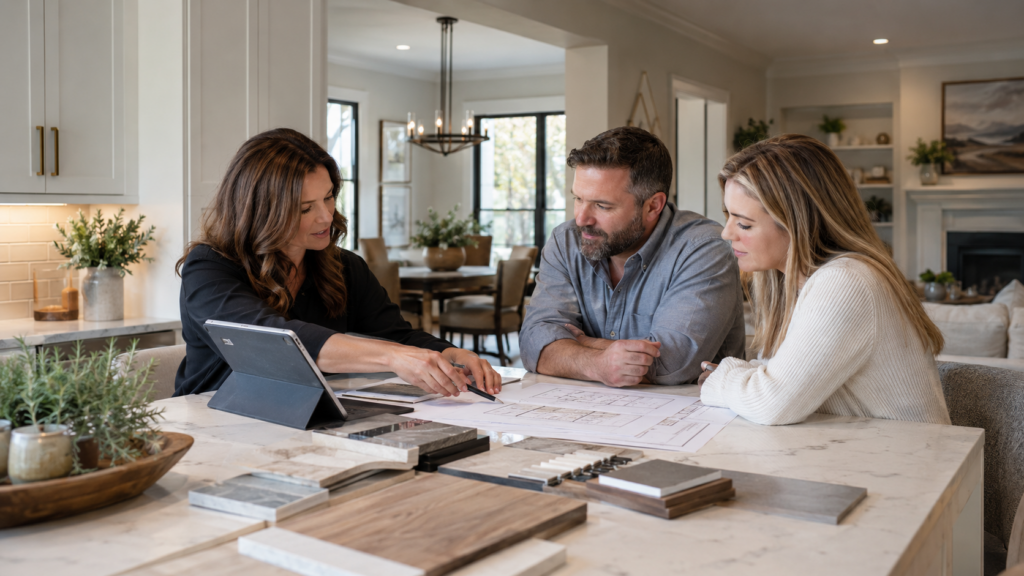
Choosing a remodeling contractor is one of the most important decisions you will make when renovating your Charlotte, NC home.
Whether you are planning a kitchen renovation, bathroom remodel, whole-home renovation, or a major interior transformation, the contractor you choose can have a significant impact on the experience, budget, timeline, and final result.
And while it may be tempting to choose the contractor with the lowest estimate, price should only be one part of the decision.
A successful remodeling project requires planning, communication, experienced project management, quality construction, and a clear understanding of what is included in the work.
Before you sign a remodeling contract, ask these 10 questions.
1. Are You Licensed to Perform This Work in North Carolina?
Start with the basics: verify that the contractor is properly licensed for the project.
In North Carolina, a general contractor license is required when a construction project is valued at $40,000 or more. Homeowners can verify a contractor’s license through the North Carolina Licensing Board for General Contractors.
A license is not the only factor you should consider, but it is an important first step.
Ask:
- Is the company currently licensed?
- Is the license appropriate for the type and size of project?
- Who is the qualifying individual?
- Is the company you are signing with the same company shown on the license?
You can also ask the contractor to provide documentation of applicable insurance coverage.
A reputable remodeling company should be comfortable answering these questions.
2. What Exactly Is Included in Your Estimate?
Two remodeling estimates can look very different even when they appear to describe the same project.
One contractor may provide a simple total price. Another may provide a detailed scope of work identifying materials, labor, allowances, demolition, installation, permits, cleanup, and other project costs.
The North Carolina Licensing Board for General Contractors recommends that homeowners compare more than the bottom-line price, including the quantity and quality of materials, payment schedule, and expected timeline.
Before comparing estimates, make sure you understand:
- What work is included
- What materials are included
- Which items are allowances
- What is excluded
- Whether permits are included
- Who handles design
- Who coordinates subcontractors
- How changes will be priced
- What cleanup is included
A lower estimate is not necessarily a better value if important parts of the project are missing.
3. Who Will Design My Remodeling Project?
For many homeowners, design is one of the most important parts of a successful renovation.
This is particularly true for kitchens, bathrooms, and whole-home remodeling projects where layout, storage, lighting, materials, and functionality all need to work together.
Ask your contractor:
Who is responsible for the design?
Some contractors build from plans prepared by someone else. Others provide design services as part of the remodeling process.
With a design-build company, design and construction can be coordinated under one team.
That can make it easier to evaluate decisions based on both appearance and construction requirements before work begins.
For example, a beautiful kitchen design still needs to account for cabinet dimensions, appliance specifications, electrical requirements, plumbing, lighting, ventilation, and building codes.
Good design is not simply about making a space look beautiful. It is about making sure the space works.
4. Who Will Manage My Project?
Ask who your primary point of contact will be after construction begins.
A remodeling project can involve designers, project managers, carpenters, electricians, plumbers, cabinet installers, countertop fabricators, painters, flooring installers, and other professionals.
Without clear coordination, homeowners can end up feeling like they are responsible for managing everyone themselves.
Ask:
- Who schedules the trades?
- Who communicates schedule changes?
- Who coordinates inspections?
- Who answers questions during construction?
- Who handles unexpected conditions?
- How often will I receive project updates?
A professional remodeling company should have a defined process for managing these responsibilities.
5. Do You Handle Permits and Inspections?
Permitting is an important part of many remodeling projects, particularly when work involves electrical, plumbing, mechanical, structural, or other regulated construction.
Charlotte’s permitting requirements can involve both City of Charlotte and Mecklenburg County processes depending on the project. The City provides an online system for determining the appropriate application and allows homeowners and professionals to research projects and permits.
Charlotte also states that permits are required for construction activities including building, electrical, mechanical, and plumbing work.
Before hiring a contractor, ask:
Who is responsible for determining which permits are required and coordinating the permit process?
Also ask who will schedule required inspections.
A contractor who clearly explains this process can help you understand what needs to happen before construction begins.
6. Can You Show Me Similar Projects You Have Completed?
Experience matters, but not all remodeling experience is the same.
If you are remodeling a $75,000 kitchen, you may want to see examples of kitchens with comparable scope and quality.
If you are considering a whole-home renovation, ask to see whole-home projects.
Look for examples that demonstrate:
- Quality of workmanship
- Attention to detail
- Design ability
- Material installation
- Space planning
- Consistency
- Experience with projects similar to yours
Ask whether the photographs represent the contractor’s actual work.
It can also be helpful to visit a completed project when possible or speak with previous clients.
7. Can You Provide References?
Online reviews can be useful, but speaking directly with previous customers can provide information that a review cannot.
The North Carolina Licensing Board for General Contractors recommends checking at least three references and asking whether previous clients were satisfied with the contractor’s work, schedule, and contract terms.
When speaking with a reference, consider asking:
Did the contractor communicate well?
Was the project completed reasonably close to the expected schedule?
How were changes handled?
Were there unexpected costs?
How did the contractor respond when something went wrong?
That last question can be particularly revealing.
Every remodeling project involves decisions and, occasionally, unexpected conditions. What matters is how the contractor communicates and resolves those issues.
8. How Do You Handle Changes During Construction?
Even a well-planned remodeling project can encounter unexpected conditions.
You might discover damaged framing behind a wall, outdated wiring, plumbing problems, or another condition that could not reasonably be identified before demolition.
Homeowners may also change their minds about finishes or request additional work.
Ask your contractor:
What happens if the scope changes?
The process should be clear.
Changes should be documented, priced, and approved before the additional work proceeds whenever practical.
The North Carolina Licensing Board for General Contractors recommends that changes to the contract be documented in writing.
A clear change-order process helps protect both the homeowner and contractor.
9. What Does the Payment Schedule Look Like?
Be cautious of any contractor who asks you to pay the entire project cost upfront.
The state licensing board advises homeowners not to make a large down payment and recommends a payment schedule that follows the progress of the work.
Before signing, make sure you understand:
- Initial payment requirements
- When progress payments are due
- What milestones trigger payments
- How approved changes affect payments
- What happens with final payment
- What happens if the project schedule changes
Your contract should clearly explain the payment structure.
The goal is not simply to find the lowest deposit. It is to understand how your money relates to the progress and obligations of the project.
10. What Happens After I Sign the Contract?
This may be one of the most important questions you can ask.
A contractor should be able to explain what happens next.
For example:
What happens after the contract is signed?
Will there be a design phase?
Will measurements be verified?
When will selections be finalized?
When are materials ordered?
When will permits be submitted?
When will construction begin?
Who will contact you?
What should you expect during demolition?
What happens during the final walkthrough?
A clear process can make a major difference in the remodeling experience.
Don’t Choose a Remodeling Contractor Based on Price Alone
Price matters. Your remodeling budget matters.
But the lowest estimate is not automatically the lowest-cost project.
A contractor who provides a significantly lower initial price may have excluded items that another contractor included. Allowances may be different. Materials may differ. Project management may differ. The level of design services may differ.
Instead of asking:
“Who is the cheapest contractor?”
consider asking:
“Which contractor provides the best overall value for the project I want to build?”
That means comparing the scope, materials, experience, communication, project management, contract, warranty, schedule, and overall approach—not just the final number.
What Should Be in a Remodeling Contract?
Before signing, make sure the agreement clearly identifies the project and the responsibilities of both parties.
Important information may include:
- Detailed scope of work
- Materials and specifications
- Payment schedule
- Estimated start and completion dates
- Change-order procedures
- Permit responsibilities
- Insurance information
- Warranty information
- Cleanup responsibilities
- Allowances and exclusions
- Procedures for resolving issues
The North Carolina Licensing Board for General Contractors specifically recommends a written contract describing the work, materials, equipment, payment schedule, timeline, permit responsibilities, insurance, warranty, and other project details.
If something is important to you, make sure you understand where it appears in the agreement.
Why the Right Remodeling Partner Matters
A remodeling project is more than a transaction.
For several weeks or months, you may have contractors, designers, installers, and project managers working inside your home.
You are making decisions about materials, layout, budget, and functionality.
You want to know who is responsible for what—and who you can contact when you have a question.
That is why the relationship between homeowner and remodeling company matters.
At Varenza Design Build, we believe homeowners should have a clear understanding of their project before construction begins.
Our design-build approach brings design and construction together so that the project can be planned as a complete system rather than treating design and construction as completely separate processes.
From kitchen remodeling and bathroom renovations to larger interior and whole-home projects, our goal is to combine thoughtful design with organized construction and clear communication.
Ready to Start Your Charlotte Remodeling Project?
Choosing the right contractor does not have to be overwhelming.
Start by asking questions.
Verify licensing and insurance. Review comparable projects. Check references. Understand the scope of work. Ask about permits. Review the payment schedule. Make sure changes are documented. Most importantly, choose a company you feel comfortable trusting with your home.
Your remodeling project represents a significant investment. Taking time to choose the right partner before construction begins can help create a smoother experience and a better finished result.
If you are considering remodeling your kitchen, bathroom, or home in Charlotte, NC, Varenza Design Build can help you take the next step.
Contact Varenza Design Build to schedule a consultation and discuss your remodeling goals.